Roads of Silk and Story: Across Armenia’s Living Heritage
7 Days Through Armenia’s Cultural Memory | Silk Road Passages, UNESCO Monasteries & Living Crafts
For centuries, Armenia stood at the crossroads of empires. Caravans carried silk, spices and ideas across its mountain passes; monks copied manuscripts in cliffside libraries; master builders raised churches that still stand after a thousand winters. Their stories are not locked in museums — they are carried on by the scribes, carpet weavers, stone carvers and storytellers you meet along the way.
Roads of Silk and Story traces that living heritage from the manuscripts of Yerevan to the green valleys of Lori, the caravanserais of the high passes and the cliff-top monastery of Tatev. It is a journey for curious minds: travelers who want to understand how a small nation preserved its language, faith and art through three thousand years of history.
Ideal for: history lovers, first-time visitors, families reconnecting with Armenian roots.
7 days
Private or small group (max 20)
English, Russian, Armenian, and more on request
Highlights
- A private introduction to illuminated manuscripts at the Matenadaran
- UNESCO World Heritage monasteries of Haghpat, Sanahin, Etchmiadzin and Geghard
- The 14th-century Orbelian Caravanserai on the Silk Road’s Selim Pass
- A ride on the Wings of Tatev, one of the world’s longest reversible cable cars
- Hands-on encounters with carpet weavers, khachkar carvers and storytellers
Day 1 - The Keepers of Memory
Yerevan · Matenadaran · Welcome Dinner
- Arrival & private transfer to your boutique hotel.
- Matenadaran: A guided introduction to one of the world’s richest collections of ancient manuscripts, including the illuminated gospels that carried Armenian art through the centuries.
- Evening walk along Northern Avenue and the Cascade.
- Welcome dinner with traditional music.
- Overnight: Yerevan


Day 2 - The Spiritual Heart
Etchmiadzin · Zvartnots · Erebuni
- Etchmiadzin Cathedral: The mother church of Armenian Christianity, among the oldest cathedrals in the world.
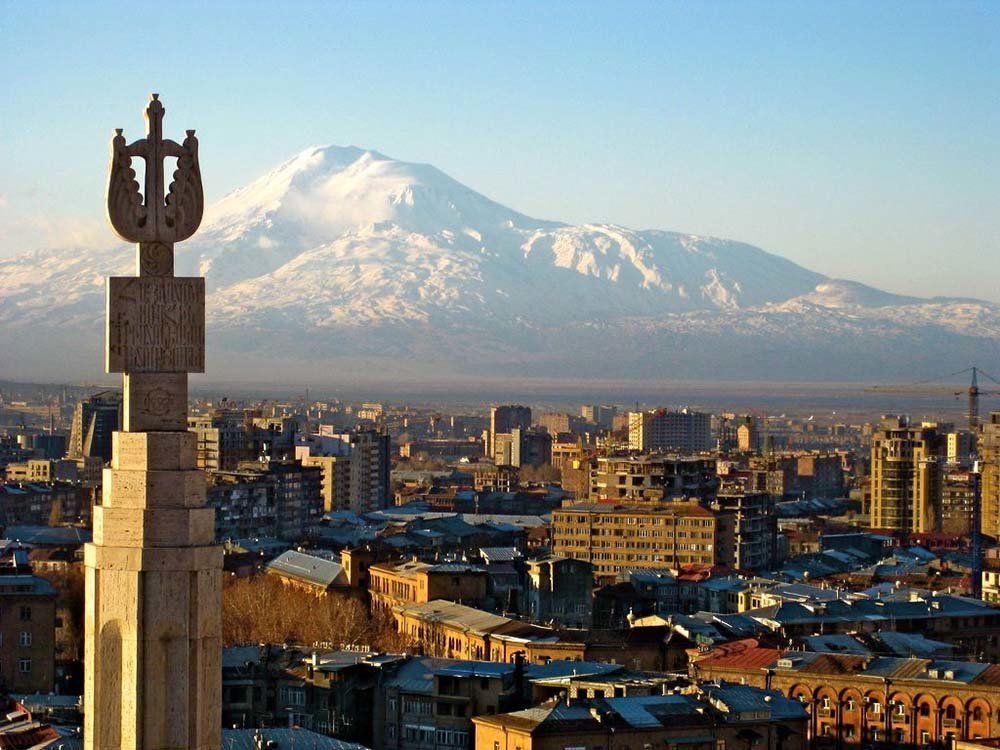
- Zvartnots ruins: The 7th-century circular cathedral, a UNESCO site with Ararat as its backdrop.
- Erebuni Fortress: The Urartian citadel founded in 782 BC, birthplace of Yerevan.
- Overnight: Yerevan
Day 3 - Monks, Poets and the Debed Canyon
Haghpat · Sanahin · Dsegh
- Sanahin & Haghpat: Twin UNESCO monasteries in the Debed Canyon, once great centers of learning, illumination and calligraphy.
- Dsegh: The village of Hovhannes Tumanyan, Armenia’s beloved storyteller and poet — with a reading of one of his tales.
- Village dinner with a local family.
- Overnight: Lori or Dilijan
Day 4 - Crafts of the Forest Town
Dilijan · Goshavank · Lake Sevan
- Old Dilijan craft street: Meet artisans working in wood, ceramics and textiles.
- Goshavank: The monastery of Mkhitar Gosh, author of Armenia’s medieval law code, and home to one of the finest carved khachkars in existence.
- Sevanavank at sunset above the lake.
- Overnight: Sevan or Dilijan
Day 5 - Caravans on the High Pass
Selim Caravanserai · Yeghegis · Noravank
- Orbelian Caravanserai (1332): Step inside the stone hall where Silk Road merchants once sheltered on the 2,400-meter Selim Pass.
- Yeghegis Valley: A medieval Jewish cemetery and quiet chapels that reveal Armenia’s history of trade and coexistence.
- Noravank: Red-cliff monastery and the masterpieces of sculptor-architect Momik.
- Overnight: Yeghegnadzor region
Day 6 - Wings Over the Gorge
Tatev · Khndzoresk · Goris
- Wings of Tatev: Fly across the Vorotan Gorge to Tatev Monastery, once home to a renowned medieval university.
- Old Khndzoresk: A cave village and its swinging bridge, where families lived in the rock until the 1950s.
- Carpet-weaving encounter: Learn the symbols woven into Syunik carpets.
- Overnight: Goris
Day 7 - Stone, Song and Return
Khor Virap · Vernissage · Farewell Dinner
- Khor Virap: A final view of Ararat on the road back to Yerevan.
- Khachkar workshop: Watch a master carver at work and try the chisel yourself.
- Vernissage open-air market (weekends) for crafts and carpets.
- Farewell dinner and storytelling evening.
- Overnight: Yerevan
Include
- The Journey Passport, stamped at every caravanserai, monastery and workshop.
- Private choir or duduk moment in a historic chapel.
- Artisan encounters: manuscript, carpet, khachkar and craft workshops.
- Scholar-led storytelling: optional evening talks with a historian.
- The Ark of Armenia Gift Box, including a miniature khachkar keepsake.
Book This Tour
Have a question?
Looking for more info? Send a question to the tour agent to find out more.
Frequently Asked Questions
How much walking is involved?
Moderate: short walks on uneven monastery paths and village streets. Every day can be adapted.
Is Roads of Silk and Story suitable for families with children?
Yes. Cable cars, cave villages and hands-on workshops are especially loved by younger travelers.
Can I add my family’s ancestral region?
Yes. We can weave a village, church or archive visit into the route — ask us when you enquire.
How many UNESCO sites will I see?
Five: Etchmiadzin, Zvartnots, Haghpat, Sanahin and Geghard (on request).
What languages are spoken in Armenia?
Armenian is the official language. Russian and English are widely spoken, especially in hospitality.
English is common among younger people, and regardless of the language barrier, locals will always help you find your way.
What is the weather like? Is there a best season to visit?
Armenia has four distinct seasons – warm summers, snowy winters, blooming springs, and colorful autumns.
There are meaningful, enjoyable experiences in every season, from hiking and wine routes to winter activities.
What currency is used and can I pay by card?
The Armenian Dram (AMD) is the national currency.
Card payments and ATMs are widely available in cities; rural areas may require cash.
Apple Pay and Google Pay are accepted in many places.
What type of electrical plugs does Armenia use?
Armenia uses Type C (European) plugs with 220 – 240V, 50 Hz.
If your device reads 100 – 240V, only an adapter is needed.
Most hotels can provide one upon request.
How can I get mobile data and internet access?
SIM cards are easy to purchase at the airport or in Yerevan.
Plans cost around $10 – $12, often with generous or unlimited data.
Coverage is strong nationwide, even in remote nature areas.
Is the tap water safe to drink?
Yes. Armenia’s tap water is clean and fresh.
You will also find pulpulaks – traditional stone fountains – offering natural spring water throughout the country.
Is there a dress code?
Do I need vaccinations to travel to Armenia?
Can I drive in Armenia with my home-country license?
Visitors from Vienna Convention countries may use their national license.
Others will need an international driving permit.
Do I need a visa to enter Armenia?
Many nationalities can enter visa-free or obtain an e-visa easily.
We will advise you on requirements based on your passport.
How long should I stay to experience Armenia meaningfully?
Is Armenia safe for solo travelers, including women?
Is photography allowed in churches and monasteries?
What cultural etiquette should I know?
- Greet people politely.
- Keep voices low in sacred spaces.
- Ask before photographing locals.
Armenians value respect, kindness, and hospitality.
Is tipping expected?
Does Armenia cater to vegetarian or special dietary needs?
What activities are available in winter?
Can Armenia be combined with Georgia or Iran in one trip?
What is the standard of accommodation?
Can I book a private guide, historian, or archaeologist?
Absolutely. Adeona specializes in expert-led travel.
You may request specialists in culture, archaeology, wine, or craftsmanship.
How does Adeona support responsible travel?
What are the emergency contacts in Armenia?
Fire: 101
Police: 102
Ambulance: 103
Gas Emergency: 104
Crisis Center: 911
City Hotline: 105
Human Rights: 116
Airport Hotline: 187